supercharged.sh

What you know outlasts the model

Models change every few months. What a person, a team or a company knows, and can put into words, stays. The lab studies how that knowledge is found, said, agreed and kept current.

An AI can only use what it can see. Most of what someone knows is said out loud long before anyone writes it down. So I start with the people.

  1. 01 · Find

    What exists, and where it lives

    Map it where it lives. Nothing moves.

    person
    Your tools, files and accounts on one map
    team
    Where the team’s work lives, linked in place
    company
    The data map: where data lives and what the AI must never do there
  2. 02 · Say

    Get what’s in heads into words

    Most knowledge is said before it is written.

    person
    Claude interviews you and writes the first notes about you: CONTEXT and VOICE
    team
    Say out loud what “good” means before a skill is built
    company
    Who knows what
  3. 03 · Agree

    People decide what counts

    The AI gathers, sorts and proposes. People decide.

    person
    You read the notes and fix what’s wrong
    team
    A correction becomes a rule only after a yes (F-03). Skills carry agreed criteria and three test cases.
    company
    One shared library, one review step, one owner (F-02)
  4. 04 · Keep current

    Only what’s true now

    When something changes, the old version goes.

    person
    Every file has a review date
    team
    Every statement has a source and an owner
    company
    A file says only what’s true now

Two measures. No numbers yet.

  • Time from new information to a note people and the AI both trust
  • Share of statements in shared notes with a source and an owner

Supercharged in 30 walks one person through it in 30 days. Mycel does it for teams and the company.

Three research areas

They follow the layers of the Supercharged Approach: one person, a team, the whole company.

  1. 01 · Personal

    What can one person hand to AI?

    • Time to the first useful result
    • Share of routines that run without them
  2. 02 · Shared

    How does a team agree what good looks like, and turn it into skills?

    • Skills with agreed criteria and three test cases
    • Corrections that become rules after a yes
  3. 03 · Company

    Where do agents work in the background, and what do people still approve?

    • Share of agent drafts approved unchanged
    • What never leaves without a human

Findings

Field notes, numbered. Each one says where it comes from and what changed because of it. Client names withheld.

F-01 · Personal

Mail and calendar came first

question
What do people want AI to reach first?
method
Staff survey at one client
n
One team, a few dozen people
date
2026
result
Two in three asked for AI that reads their mail and calendar. It was the top request.
changed
The first workshop starts with connecting mail and calendar.
F-02 · Shared

Skills stay in one person’s account

question
What happens to the skills people build on their own?
method
The same survey
n
The same team
date
2026
result
About one in four had built a skill they use. Each one lived in a personal account. About half wanted to see what colleagues had built.
changed
My recommendation: one shared skills library, one review step before a skill is shared, one named owner.

F-03 · Shared

A correction needs a yes before it becomes a rule

question
Should an AI turn corrections into its own rules?
method
Case review of a published company system, checked against my own
n
1 company, nine months on its first version
date
November 2026
result
In AI FIRST’s KI-Betriebssystem (Felix Schlenther), the agent edited its own instructions in version 1 and the rules got worse. Version 2 makes a rule only after a person says yes.
changed
The Approach, v1.3, 1 November 2026: a correction counts once. When it repeats, it becomes a rule or a test case after a person says yes.

F-04 · Company

Thinking off: same accuracy, 3.5 times faster

question
Does a reasoning model need to reason for structured extraction?
method
Eval on 24 invented coaching notes, one run. The pass rule was set before the run: accuracy may drop at most 2 points per field, and no more unusable results.
n
24 notes, Gemma 4 31B on STACKIT (Germany), at Umane
date
October 2026
result
Accuracy 99.0% both ways. Median time 14.5 s with thinking, 4.1 s without.
changed
Extraction at Umane runs without the thinking step.

F-05 · Company

Open models disappear on a date

question
What breaks when you depend on a hosted open model?
method
Own production system at Umane, commit history
date
September 2026
result
The provider retired the model we ran (Gemma 3 27B), and we found out about eight weeks late. Its successor, Gemma 4, is a reasoning model. With a token cap of 300 or 1,200 it returned nothing at all.
changed
Model names live in configuration, so switching is a config change. Length rules live in the prompt, not in a token cap.

F-06 · Shared · Preliminary

Open models come close, slower, at a fraction of the cost

question
Can an open model in a German cloud do pia’s job, drafting replies for a dental practice?
method
Blind comparison on invented patient mails and practice questions only. No real patient data. Automatic checks so far. First run, human grading still open.
n
28 invented cases, 4 models
date
November 2026
result
On 16 practice questions, the automatic checks passed for Claude 14 times, gpt-oss-120b 13 times and Qwen3.5-397B 15 times. The open models were up to three times slower, and Qwen failed all four learning cases. Estimated model cost per practice is about €35 to 40 a month for gpt-oss-120b on IONOS (Berlin), against roughly $300 to 400 for Claude on AWS in Frankfurt.
changed
pia can switch the model per task. The move to a German provider is being prepared, with Claude in Frankfurt as the backup. Today pia still runs on Claude.

Open models on sovereign clouds

Health and patient data should stay in Europe. So I test open models that run on European clouds.

why
At Umane, an athletic health club in Berlin where I am CTO, member data stays in Germany on STACKIT, which runs on C5-attested infrastructure. Practices that bill statutory insurers may send patient data only to an EU provider with a current C5 Type 2 attestation (§393 SGB V).
Umane
In production: Gemma 4 31B for text and Qwen3-VL 235B for documents, both on STACKIT in Germany. Speech-to-text runs with faster-whisper in Umane’s own cluster, and audio never touches disk. Every AI call is logged by size only, never its text.
pia
Tested on IONOS (Berlin), not live yet (F-06).
how I test
Invented data only. Blind comparison. The pass rule is written before the run. One change at a time.

If your knowledge lives in your own files, the model is a setting you can change.

From research to products

  1. 01

    Findings

    Numbered notes from real teams and from my own system, on this page.

  2. 02

    (Free) Knowledge

  3. 03

    Tools

  4. 04

    Products

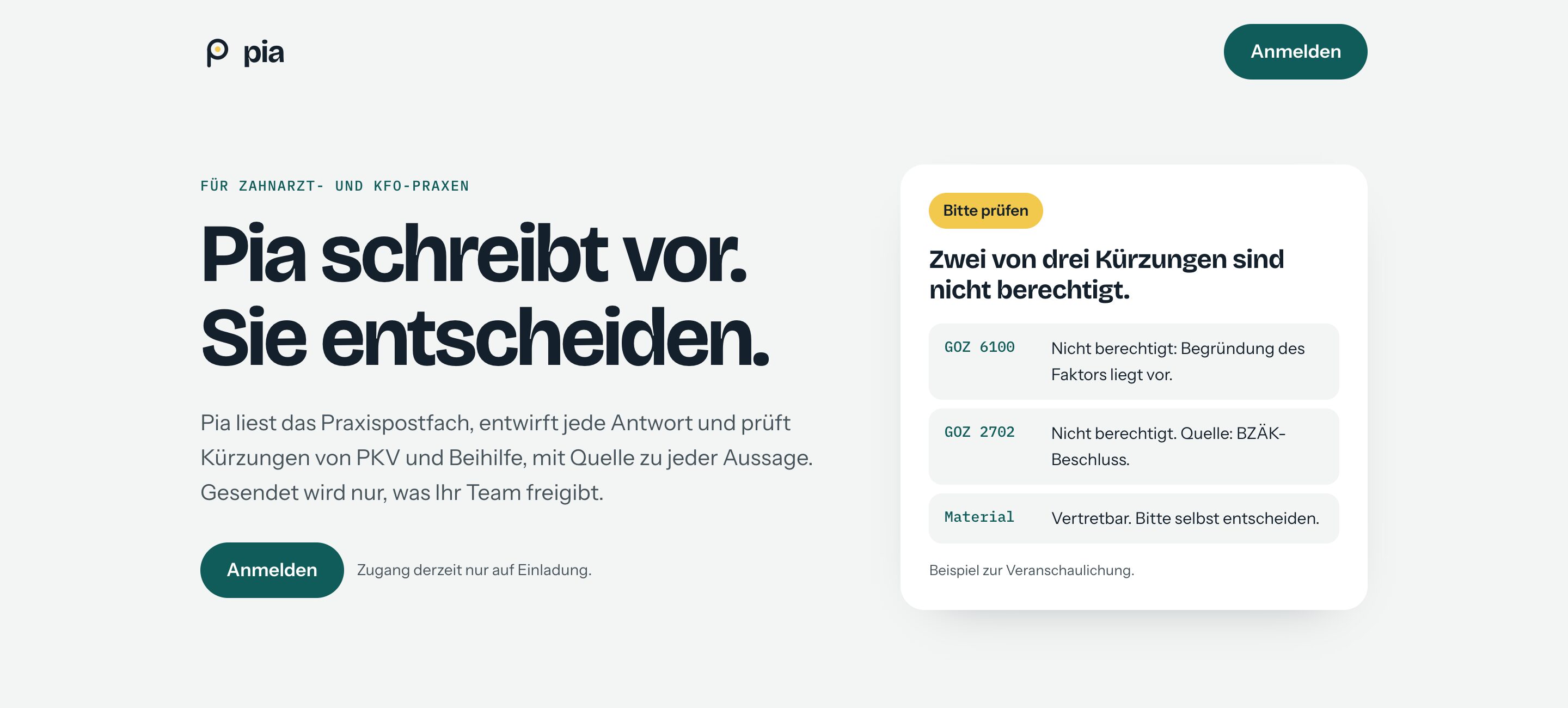
pia drafts. The practice decides.

reads
The practice inbox, and drafts every reply
checks
Insurers’ cuts, with sources
sends
Only what the team approves
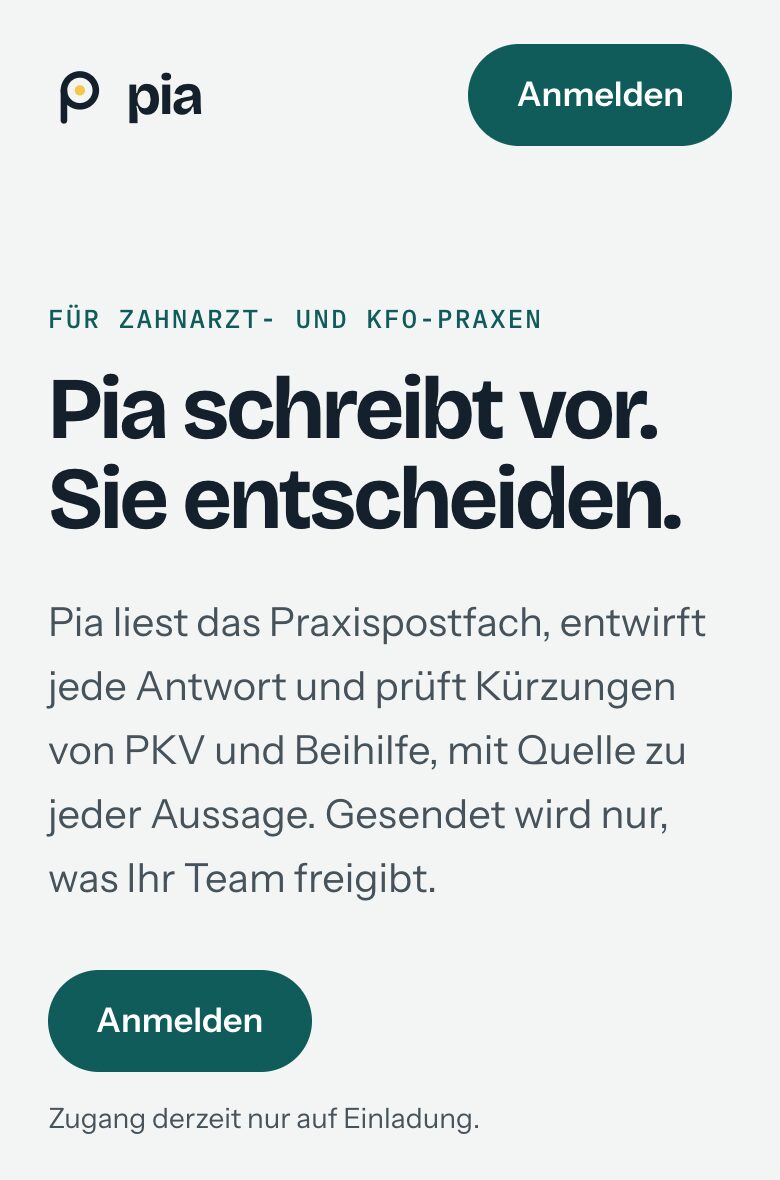
The pia homepage on a phone
The pia homepage: the headline “Pia schreibt vor. Sie entscheiden.” beside a sample review of three insurer cuts

The live site, captured 23 October 2026. The cuts shown are pia’s own example. How pia was built.

Open pia.supercharged.sh

Custom MCP servers, built to order

Connect Claude or Codex to the systems your business already runs on, like FileMaker, an ERP or an internal database. Everyone signs in with their own account, so the AI can read, write or run only what their existing rights allow.

Ask about a server

How the first one was built

$ tools/list
list_tables     read
query           read
create_record   write, asks first
update_record   write, asks first
run_script      run, asks first
add_fields      schema, full access
Tools from a FileMaker server built this year. Each call runs on the signed-in person’s own login.

House rules

  • Ship it

    Running beats perfect. Every experiment gets real users early.

  • Specialists

    Narrow tools that do one job well, not one assistant for everything.

  • Kill or keep

    If it doesn’t work, it goes. If it does, it graduates.